

Acne Scarring
Acne scarring is one of the most common skin concerns Dr Ellie Sateei sees at her London clinic, and it can affect anyone who has experienced moderate to severe acne, at any age.
Explaining acne scarring
Acne scarring is one of the most common skin concerns Dr Ellie Sateei sees at her London clinic. It can affect anyone who has experienced moderate to severe acne, regardless of age, and often lingers long after the breakouts themselves have cleared. Results vary between individuals, and Dr Sateei will always talk you through what can realistically be achieved before any treatment plan is agreed.
What causes acne scarring?
Acne scarring develops when the skin’s deeper layers are damaged during inflamed, cystic or picked breakouts. Cystic acne is more likely to leave lasting marks than surface-level blemishes, and genetics, hormonal changes and picking or squeezing spots all influence how visible scarring becomes. Sun exposure can darken and prolong marks.
Signs and symptoms
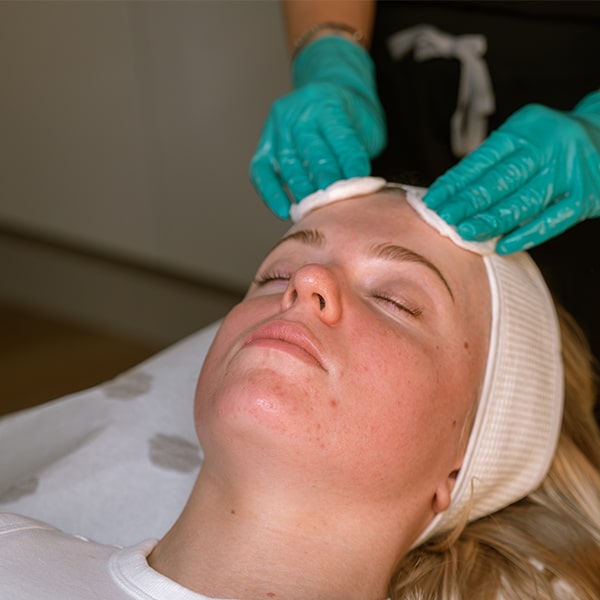
Icepick, boxcar and rolling scars create different textural patterns, from narrow pitting to broader, wave-like unevenness. Post-inflammatory hyperpigmentation, the flat discoloured marks left after a spot heals, is often mistaken for true scarring but fades more readily.
Treatment options
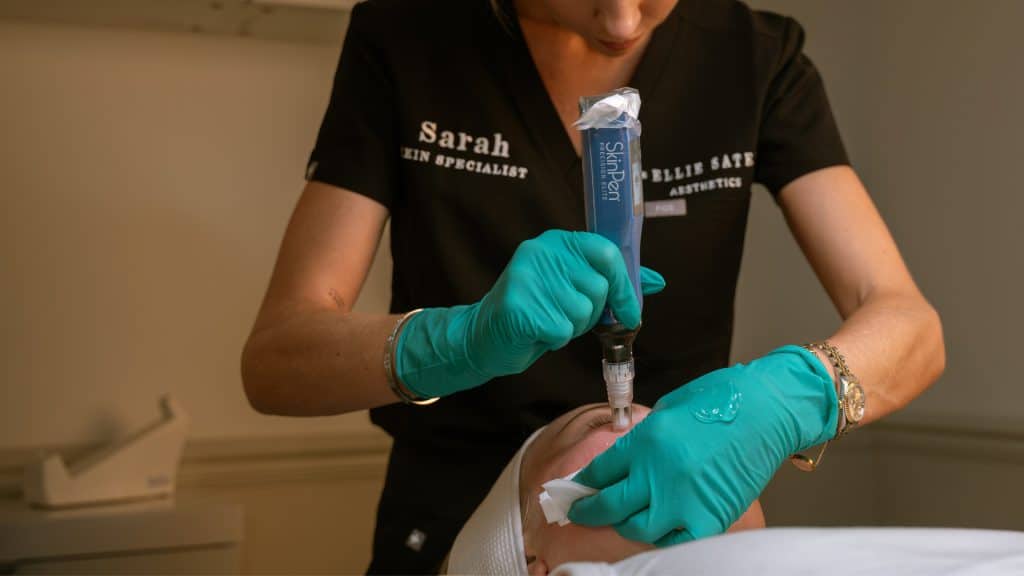
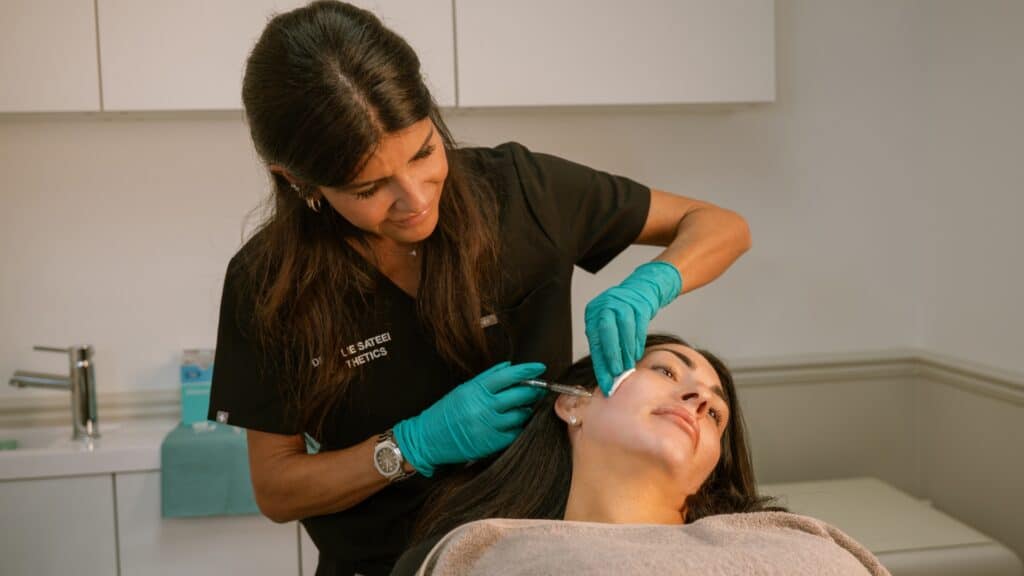
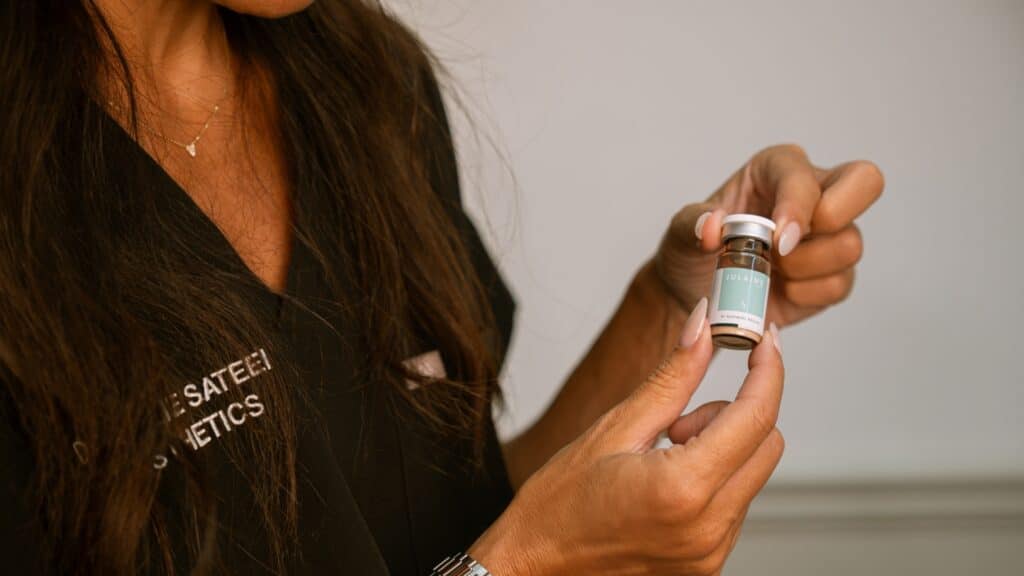
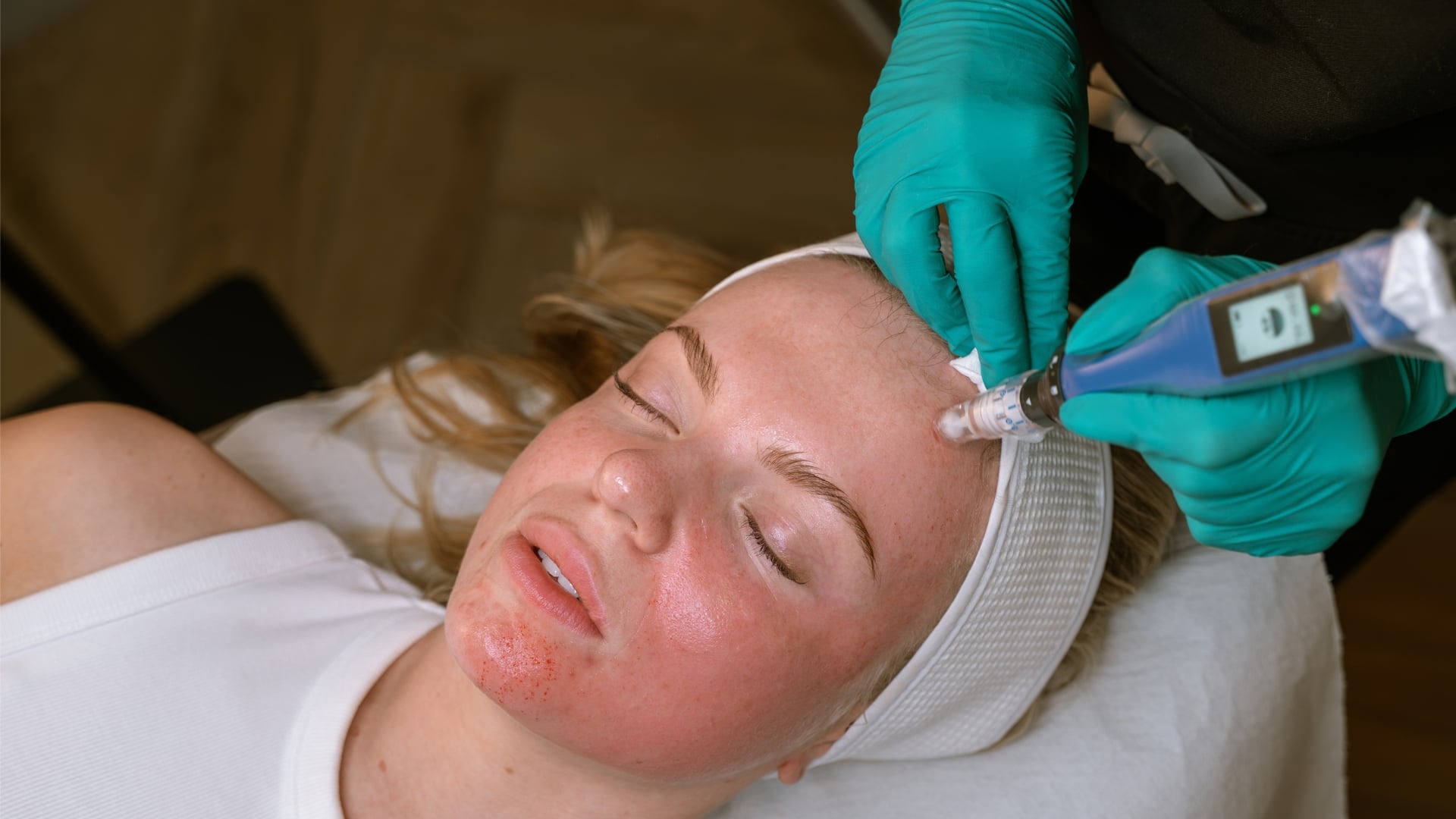
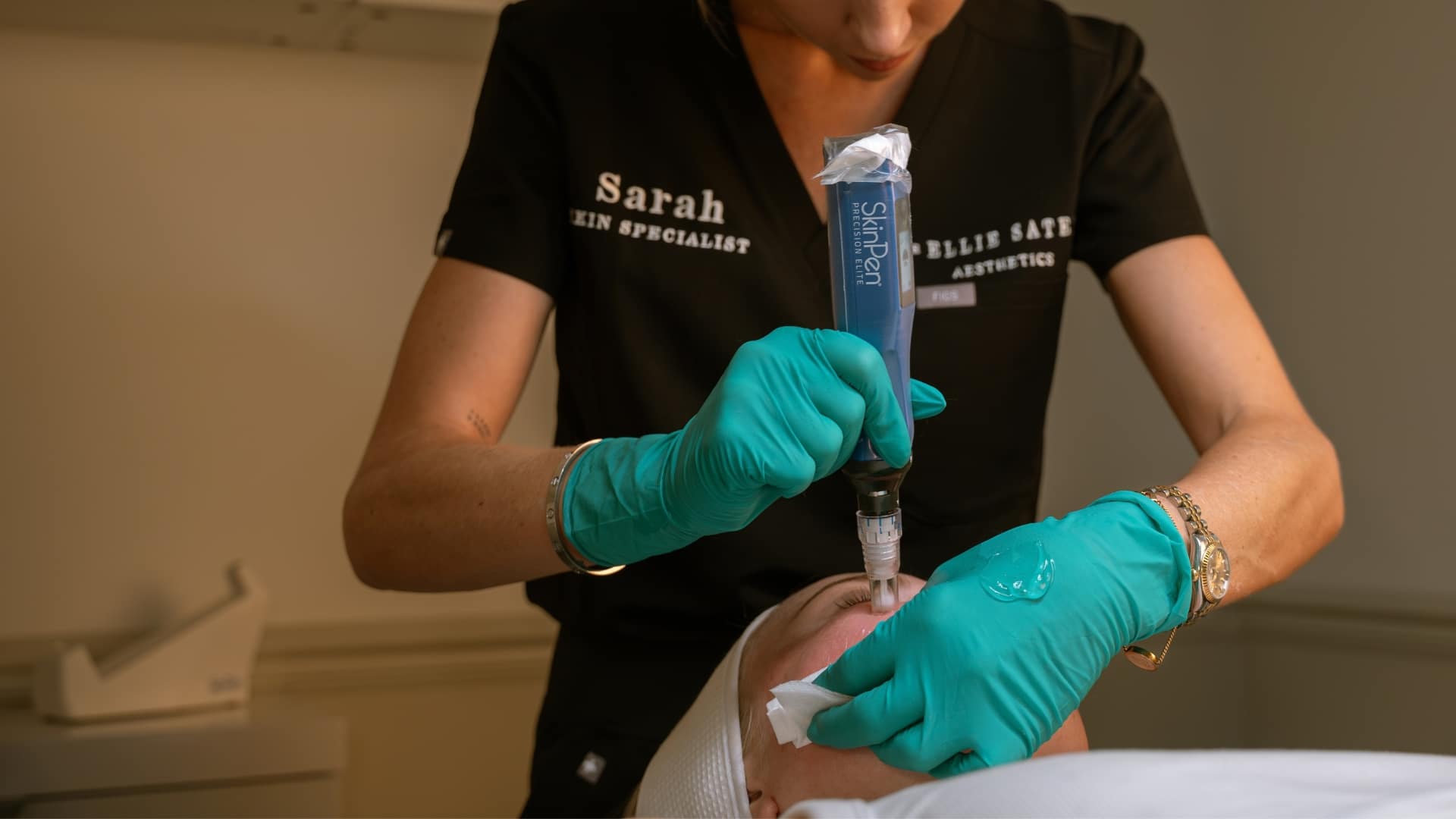
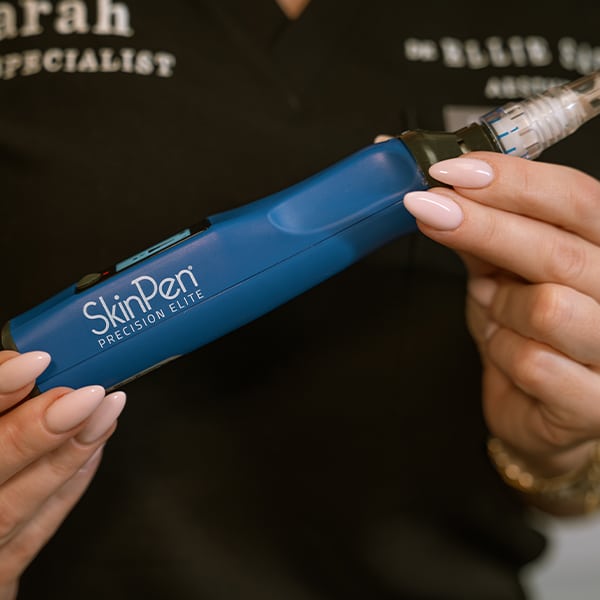
Acne scarring treatment is tailored to the type and depth of the scars, your skin and any ongoing acne. A personalised plan may combine SkinPen microneedling, appropriate chemical peels and selected injectable treatments, including dermal fillers, polynucleotides, skin boosters such as Skinvive, and Juläine collagen stimulation.
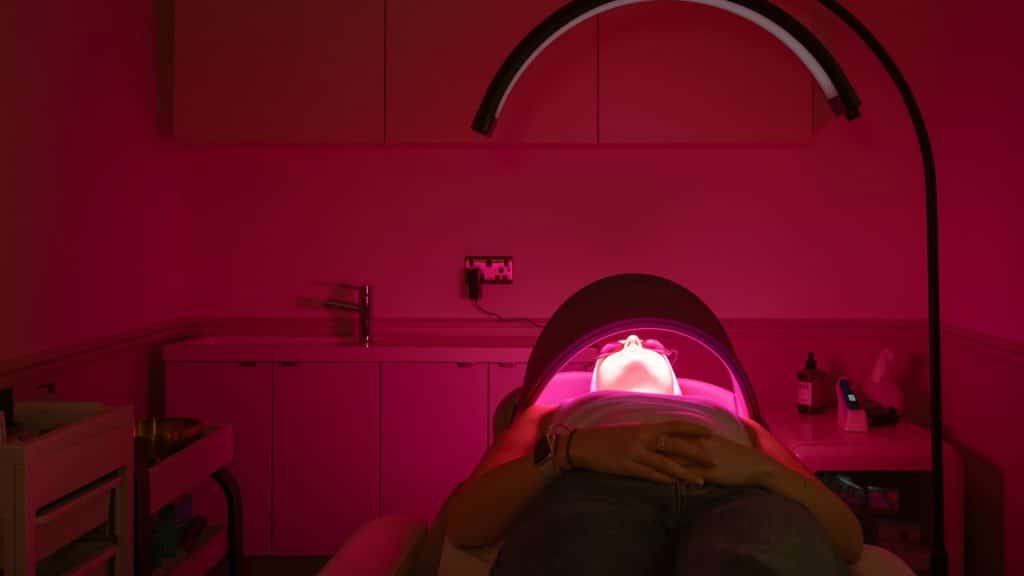
These treatments have different roles: some target scar depressions and uneven texture, while others support hydration and overall skin quality. LED phototherapy may also be included to support the management of active acne, inflammation or recovery. The combination and timing are agreed following assessment, alongside suitable medical-grade skincare.
Microneedling is provided by our skin specialists at the London clinic.
Why choose Dr Ellie Sateei?
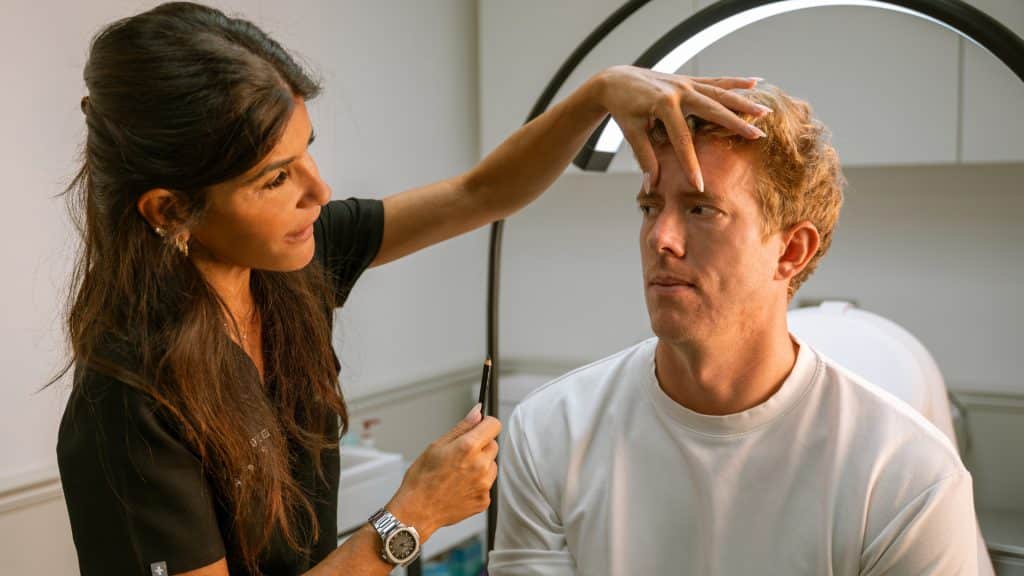
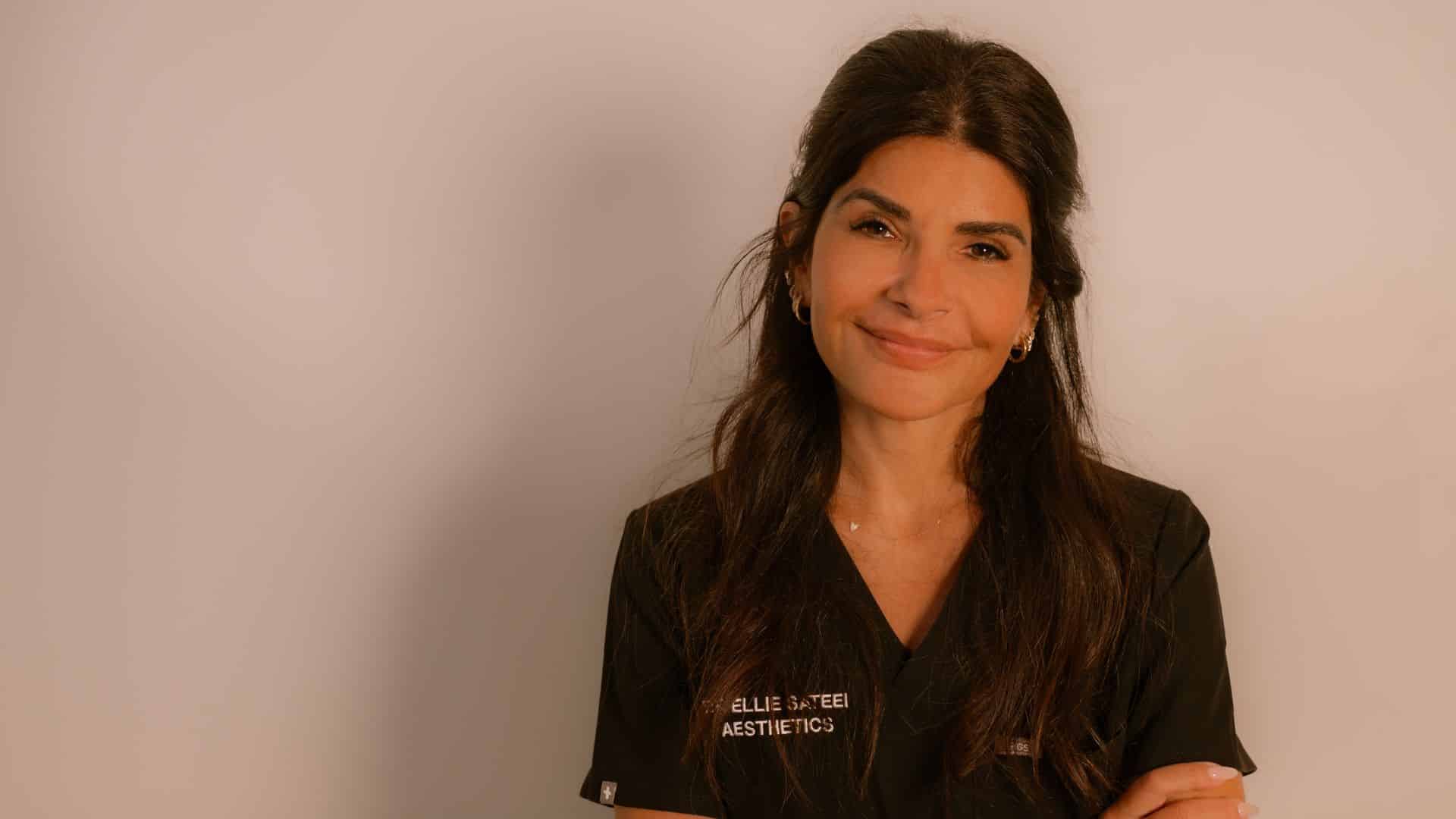
Dr Sateei brings over two decades of experience in dermatology and aesthetics, approaching acne scarring with particular care and transparency about what can realistically be achieved. As a GDC-registered practitioner, patient safety and ethical prescribing sit at the centre of her practice at her London clinic (near Harley Street).
Acne scarring FAQs
Deeper skin damage during inflamed or cystic breakouts, influenced by genetics, severity, hormones and picking.
Early, effective acne treatment, avoiding picking and sun protection help minimise long-term marks.
There is no single best treatment for every acne scar. Depending on assessment, a plan may combine microneedling, chemical peels and selected injectables, including dermal fillers, polynucleotides, skin boosters such as Skinvive, and Juläine. LED may be included as a supporting treatment. Your clinician will explain what each recommended treatment is intended to improve.
Improvement builds gradually over a series of sessions.
Mild discomfort; topical numbing available.
Microneedling causes redness for a day or two; the Skin Renewal Facial has no expected downtime.
Most adults with textural or pigmented scarring.
Treatment can reduce the appearance, but results vary and complete removal cannot be guaranteed.
Many benefit from a combination approach.
No, it can be treated at any age.
Treatments of interest
Brands and Treatments to help with acne scarring