

Medical-Grade Skincare in London
Personalised skincare selected for your skin, concerns and goals, with prescription options where clinically appropriate.
Medical-Grade Skincare at a Glance
What Does Medical-Grade Skincare Actually Do?
Consistent skincare plays an important role in maintaining skin health and supporting the results of aesthetic treatments.
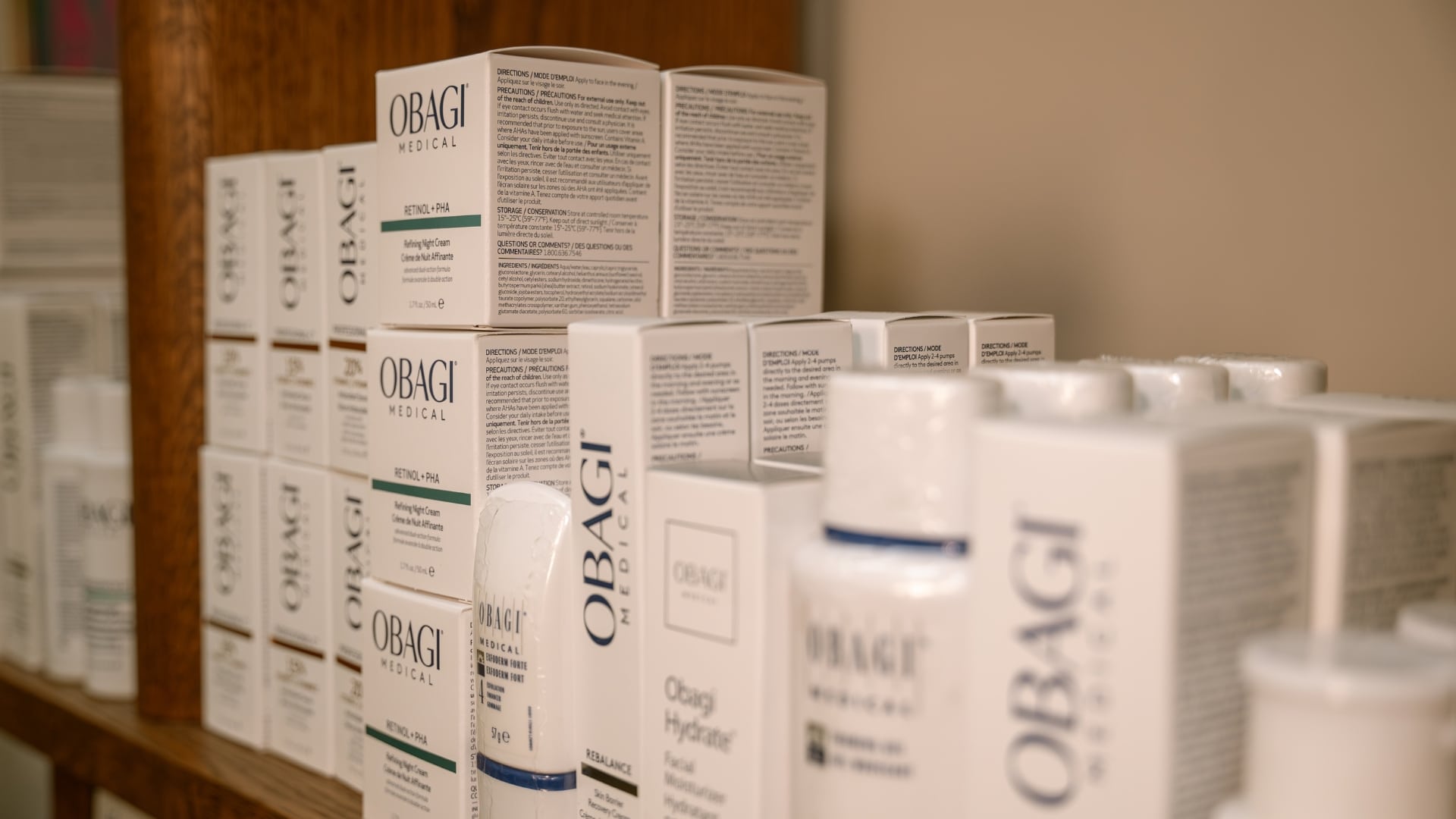
Products are selected according to their ingredients, formulation, supporting evidence and suitability for your skin, with prescription options where appropriate.
How Medical-Grade and Prescription Skincare Work
The effectiveness of a skincare product depends on its active ingredients, formulation and suitability for your skin.
Retinoids are the clearest example. Over-the-counter retinol needs conversion within the skin before it becomes active, which limits both its strength and its speed. Prescription tretinoin is already in its active form, which makes it considerably more effective and considerably more likely to cause irritation if introduced badly. Prescription treatments for pigmentation may be considered following assessment, with instructions on how long to use them and when to return for review.
Vitamin C, niacinamide, alpha and beta hydroxy acids and peptides all work through better-established mechanisms than most marketing suggests, and all are dose and formulation dependent. Broad-spectrum sunscreen sits underneath everything. It is not an optional final step but the single most evidence-backed intervention available, and it protects the results of every other treatment.
Dr Sateei’s approach is to introduce actives in sequence rather than all at once, because the most common reason a routine fails is that too much was started too quickly, the skin became irritated, and the patient abandoned all of it.
Who a Skincare Consultation Is For
A skincare plan may suit you if you are looking to:
- Address pigmentation, uneven tone or sun damage over the longer term
- Manage acne or acne-prone skin alongside or instead of clinical treatment
- Introduce a retinoid properly, having previously found one too irritating
- Review your current routine and identify which products suit your skin.
- Maintain and protect the results of clinical treatment
- Prepare the skin before a procedure, which may improve both outcome and recovery
It is worth saying plainly that skincare has limits. It will not lift structural descent, restore lost volume or remove established textural scarring. Where those are your concerns, Dr Sateei will tell you which treatment addresses them and where skincare simply supports the result.
Tell your clinician if you are pregnant, planning pregnancy or breastfeeding. Your routine will be reviewed so unsuitable ingredients, including retinoids during pregnancy, can be avoided.

What to Expect, and When You Will See Results
A skincare consultation includes a clinical assessment of your skin’s condition, barrier function, sensitivity and concerns, a review of everything you currently use, and a written plan setting out what to apply, when and in what order. Where prescription products are appropriate, these are prescribed following that face-to-face assessment, as the law requires.
Results develop gradually, with timing depending on your concerns and the products used. Hydration and barrier improvements can show within two to four weeks. Texture and clarity typically take eight to twelve weeks. Pigmentation is the slowest, often three to six months of consistent use, and prone to returning without daily sun protection.
Retinoids can cause dryness, flaking or irritation. Introduce them as advised and contact your clinician if symptoms persist or worsen.
A review appointment is recommended at around eight to twelve weeks to assess response and adjust. Skincare is not a one-off prescription.
Benefits of a Prescribed Skincare Plan
- Gradual introduction: active products introduced at a pace suited to your skin’s tolerance
- Prescription strength available: access to formulations that cannot be bought over the counter
- A focused routine: products selected for your skin’s needs, with clear instructions on how to use them
Dr Ellie Sateei on Skincare
“My approach to skincare is to keep it focused and personal: select products that suit your skin, introduce them carefully and review your progress. The aim is long-term skin optimisation and smart aging.”
Dr Ellie Sateei has over two decades of experience in dermatology and aesthetics.
Medical-Grade Skincare FAQs
The most useful distinction is whether a product suits your skin and has evidence supporting its intended use. A consultation helps identify suitable products, including prescription options where appropriate.
Prescription skincare requires a clinical assessment. For help choosing a routine suited to your skin, book a skincare consultation.
Hydration and barrier improvements can show in two to four weeks. Texture and clarity typically take eight to twelve weeks. Pigmentation is slowest, often three to six months.
An adjustment period of dryness, flaking or mild irritation in the first four to six weeks is common and expected. Introducing it gradually and at the right strength keeps this manageable, which is why supervision helps.
Some products must be avoided during pregnancy, including retinoids. Tell your clinician if you are pregnant, planning pregnancy or breastfeeding so your skincare can be reviewed.
For pigmentation, tone and skin quality it does a great deal. It will not lift structural descent, restore lost volume or remove established scarring. Dr Sateei will be clear about which is which.
Medical-grade Skincare Aftercare and Recovery
Introduce products in the order and at the frequency recommended for your skin. Your clinician will explain what to expect, how to manage any irritation and when your routine should be reviewed.
Introduce products as advised, use daily sun protection and attend your recommended review. Contact your clinician if irritation develops or you need help adjusting your routine.
Before you start
- Tell your clinician which products and prescribed skin treatments you currently use, so they can advise what to continue, pause or replace
- Start one new product at a time, in the order you have been given
- If a retinol or retinoid is part of your plan, begin at the frequency advised rather than nightly, and build up as directed
- Patch testing is advised if you have a history of sensitivity
- Do not start a new active in the week before a clinical treatment
What to expect in the first six weeks
With a retinol or other active, you may notice:
- Dryness, flaking and mild tightness, usually from week one to two
- Mild redness or stinging on application
- A temporary worsening of congestion or breakouts, most common in acne-prone skin
- Increased sensitivity to sun
Some dryness or mild irritation can occur when introducing retinoids. Contact your clinician if symptoms persist or worsen, rather than assuming they are part of the adjustment.
Using your routine
- Apply to clean, dry skin, and allow a few minutes between steps where advised
- Use broad-spectrum SPF 30 or above every morning, including on overcast days and in winter. This is the single most evidence-backed step in any routine and it protects everything else you are doing
- Use each product in the amount and at the frequency advised by your clinician
- If irritation develops, contact your clinician for advice on adjusting or pausing the product
- Avoid waxing, threading and hair removal creams on retinoid-treated skin
- Tell any other practitioner that you are using a retinoid before any facial treatment
- Use only the products Dr Sateei has recommended
When will I see results
- Hydration and smoothness often improve within two to four weeks
- Texture and clarity typically take eight to twelve weeks
- Pigmentation is the slowest, often three to six months of consistent use, and is prone to returning without daily sun protection
- A review at eight to twelve weeks is recommended to assess response and adjust. Skincare is not a one-off prescription
- Results vary between individuals
When your skincare needs individual review
Your skincare plan needs individual review if you:
- Are pregnant, breastfeeding or trying to conceive. Retinoids are not used in pregnancy
- Have an active skin infection, eczema flare or significantly compromised barrier, which usually needs settling first
- Have a known allergy to any ingredient in the plan
- Are taking a medication that interacts, which Dr Sateei will review
Suitability is confirmed at a full skin consultation before anything is recommended.
When to contact us
Please contact the clinic if you experience:
- Irritation that persists or worsens
- Significant redness, swelling, burning or weeping
- A widespread rash, or any reaction suggesting allergy
- A breakout that is markedly worse than before you started
- Contact the clinic if you are unsure whether to continue a product or how to adjust your routine
Related Treatments
Other treatments Dr Sateei may recommend as part of your individual plan.