


Neck and Décolletage Rejuvenation in London
Personalised treatments to improve skin quality, hydration and firmness across the neck and décolletage.
Neck and Décolletage at a Glance
Nefertiti neck lift
From £795
What Does Neck and Décolletage Treatment Do?
The skin on the neck and chest is thinner than facial skin, has fewer oil glands, moves constantly and receives more cumulative sun exposure than most people realise. It also tends to be left out of skincare routines that stop at the jawline.
The result is a characteristic pattern: horizontal neck lines, crepiness, loss of firmness, and on the chest, sun-related pigmentation and fine vertical lines. Treatment is tailored to the skin and concerns of the neck and décolletage.
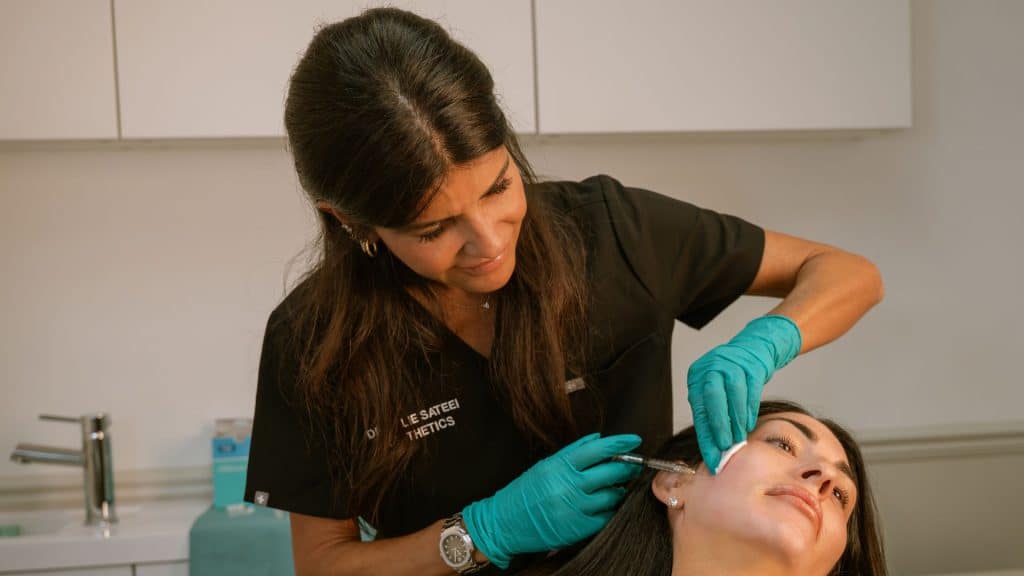
At Dr Ellie Sateei’s London clinic these areas are assessed and treated on their own terms. Results vary between individuals.
How Neck and Décolletage Treatment Works
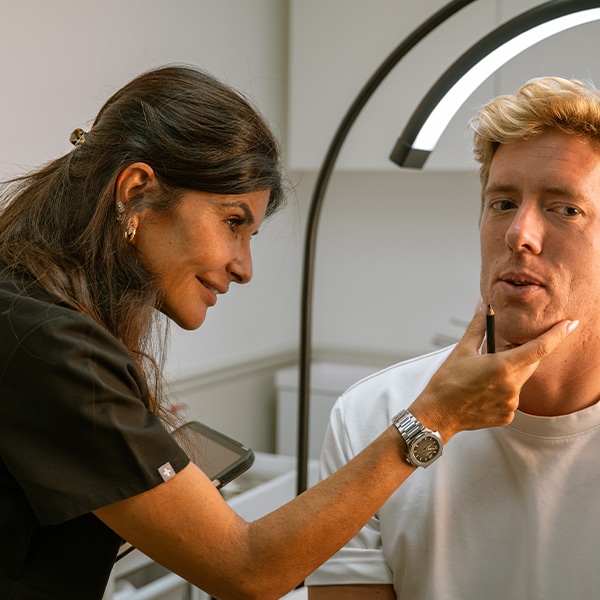
There is no single treatment, and which is appropriate depends on what has changed.
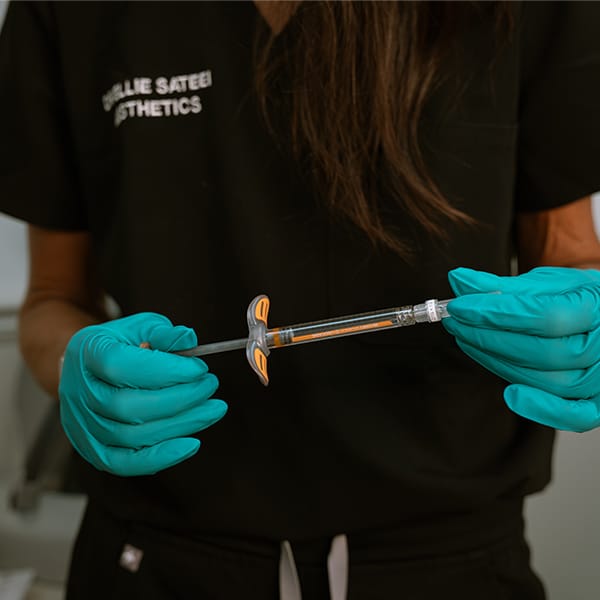
For laxity and crepiness, Profhilo spreads through the tissue to improve firmness and hydration across a broad area, which suits the neck particularly well. Polynucleotides support repair in thin, compromised skin. Collagen stimulators, often diluted, build firmness over months where more structural improvement is needed.
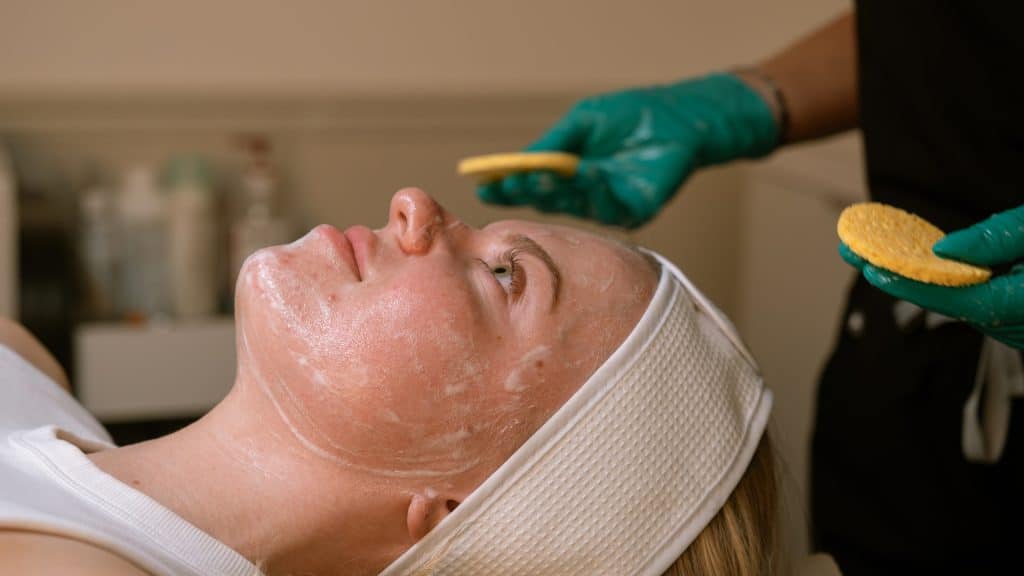
For fine lines and skin quality, skin boosters improve hydration and texture. PRX-T33 may be considered following assessment of your skin and concerns. Microneedling can be used at a shallower depth than on the face.
For pigmentation on the chest, the answer is skincare and peels rather than an injectable, combined with daily photoprotection. Sun damage on the décolletage is cumulative and largely preventable, and the routine matters more than any single treatment.
Platysmal bands, the vertical cords that become visible on the neck, are muscular and treated with botulinum toxin rather than with any of the above.
These treatments aim to improve skin quality and firmness. Where significant laxity is the main concern, Dr Ellie will discuss the limitations of non-surgical treatment and whether a surgical opinion may be appropriate.
Who Neck and Décolletage Treatment Is For
It may suit you if you are looking to:
- Improve crepiness and mild laxity on the neck
- Soften horizontal neck lines
- Improve sun-related texture and fine lines on the chest
- Address the neck alongside facial treatment for a more consistent result
- Treat pigmentation on the décolletage through skincare and peels
Suitability depends on your concerns, skin and medical history. Significant laxity and prominent neck bands require separate assessment. Tell your clinician if you are pregnant or breastfeeding.
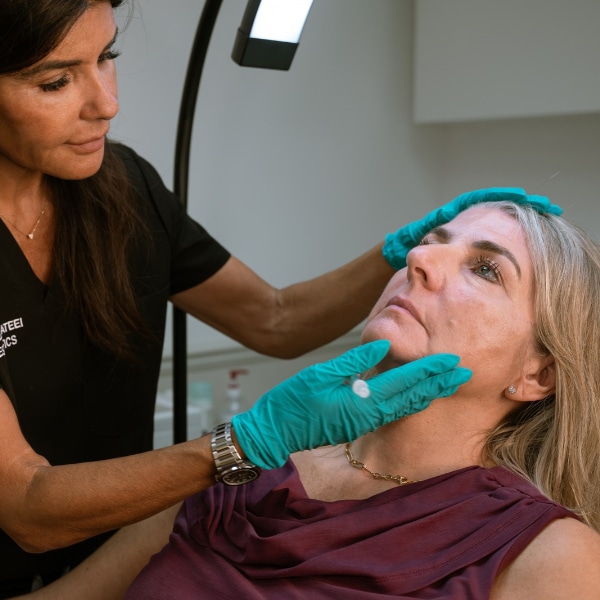
What to Expect, and When You Will See Results
Your treatment, recovery and expected results will be explained at consultation. Improvements develop at different rates depending on the approach used. The number of sessions and any maintenance treatment will be agreed as part of your personalised plan.
Hydration improvements generally show within two to three weeks. Firmness builds over one to three months as collagen responds. Pigmentation on the chest is the slowest, often three to six months of consistent skincare.
Most routes are planned as a course with maintenance afterwards.
Benefits of Neck and Décolletage Treatment
- Personalised assessment of your skin and concerns.
• Treatment options targeting hydration, texture and firmness.
• Complements your facial treatment and skincare plan.
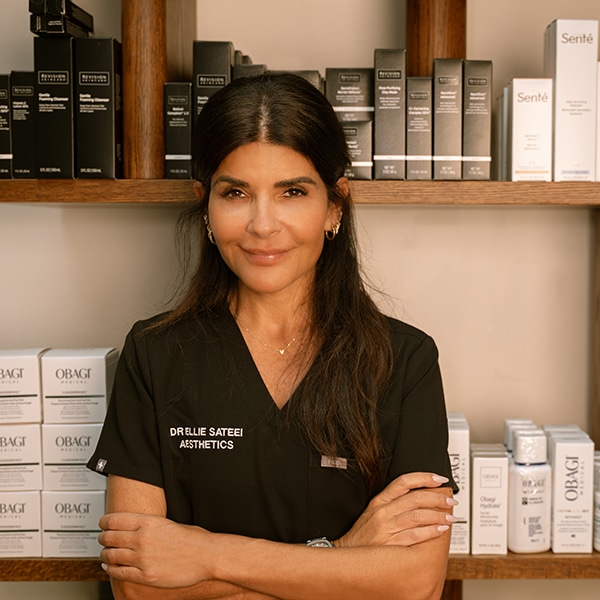
Dr Ellie Sateei on Neck and Décolletage Prices
“My approach is to include the neck and décolletage in the overall assessment, then tailor treatment to your skin and concerns. Ongoing skincare and sun protection are important parts of that plan.”
Dr Ellie Sateei has over two decades of experience in dermatology and aesthetics.
Neck and Décolletage Prices FAQs
Pricing varies with treatment. Your consultation is £195, deducted from treatment on the day.
That depends on whether laxity, texture, pigment or muscle is the dominant change. Each has a different answer and it is decided at assessment.
Non-surgical treatments can improve skin quality and firmness, but have limitations where laxity is significant. Dr Ellie will discuss what is realistically achievable and whether a surgical opinion may be appropriate.
Those are platysmal bands, which are muscular and treated with botulinum toxin rather than with skin treatments.
The pigmentation should be assessed first. Suitable options may include targeted skincare or peels, alongside daily sun protection.
It can be slightly more sensitive, as the skin is thinner. Numbing is available and the technique is adjusted accordingly.
Neck and Décolletage Aftercare and Recovery
Recovery depends on the treatment used. You will receive personalised instructions explaining what to expect, how to care for the area and when to contact the clinic.
Follow the instructions provided for your treatment, including advice on cleansing, moisturising, sun protection and when to restart active skincare.
Pre-treatment guidance
To prepare for your appointment:
- Wear a top with a low or open neckline, or one you are happy to change out of
- Arrive with the area clean, free from make-up, fake tan, perfume and body lotion
- Avoid fragranced products on the neck and chest for 48 hours beforehand
- Tell your clinician about all medicines and supplements you take. Do not stop prescribed medication without advice from your prescriber.
- Avoid alcohol for 24 hours beforehand
- Avoid sun exposure, sunbeds and fake tan for two weeks beforehand
- Tell Dr Sateei about any history of pigmentation or scarring in the area
- If you have an event coming up, allow at least two to three weeks between treatment and the date
On the day, clinical photographs and consent are completed if not already done, the area is cleansed thoroughly, and topical anaesthetic is applied where appropriate.
What to expect immediately after
Depending on the treatment used, you may notice:
- Temporary redness around the treated area
- Small raised areas at injection points, where an injectable route has been used
- Bruising where injections have been used
- Tenderness, and a tight feeling when turning the head
- Dryness or light flaking in the days afterwards
Your clinician will explain the expected recovery for your treatment. Contact the clinic if symptoms persist, worsen or concern you.
Post-treatment care
Follow your treatment-specific advice on exercise, heat, swimming, skincare and products applied to the area. Avoid friction while the skin is tender, and follow the sun-protection advice provided. Your practitioner will explain when to resume your usual routine
When will I see results
Results develop gradually, with timing depending on the treatment used and your individual response. Your clinician will explain the expected improvement, recommended number of sessions and review schedule.
Who this treatment is not suitable for
Tell your clinician if any of the following apply:
- An active skin infection or open wound in the area
- A history of keloid or hypertrophic scarring
- Existing pigmentation or a history of pigmentation developing after treatment
- A recent tan, sunburn or fake tan on the area
- Certain autoimmune conditions, or a skin disorder affecting the area
- You are pregnant or breastfeeding
Suitability is confirmed at a full medical consultation. When Dr Sateei judges that treatment is not the right approach, she will say so.
When to contact us
Contact the clinic immediately for severe or worsening pain, or skin becoming white, grey, blue or mottled around an injection site.
Contact the clinic promptly for increasing redness, heat, swelling or discharge; blistering, crusting or weeping; persistent or worsening symptoms; or new pigmentation, lumps or raised scars.
Related Treatments
Other treatments Dr Sateei may recommend as part of your individual plan.