


Dr Ellie’s Blog
Sculptra vs Juläine: What You Need to Know
Written by the team at Dr Ellie Sateei, 4th November, 2026
Both are poly-L-lactic acid. What separates them is how the particles are made, what the aftercare asks of you, and how much published evidence sits behind each.
If you have been researching collagen stimulation, you have almost certainly come across Sculptra and Juläine, and found it difficult to work out what actually separates them. Both are poly-L-lactic acid, and both work by prompting your own tissue to produce new collagen over the months following treatment. What differs is how the particles are manufactured, how the product is prepared and handled, and what each tends to be chosen for. Those differences change the aftercare, the number of appointments and, in some cases, whether the treatment is appropriate for you at all. This article explains how each one works, how they compare, and how Dr Ellie Sateei decides between them.
Why the difference between them matters
It is easy to assume that two products sharing an active ingredient are interchangeable, and that the choice between them is essentially a matter of price or clinic preference.
That is not quite the case. The way PLLA particles are manufactured affects how the product spreads through tissue, which in turn affects the aftercare protocol and how predictable the distribution is. The aftercare difference alone is significant: a massage schedule of several minutes, several times a day, for several days is a commitment some patients manage easily and others do not. A product that goes unmassaged when its protocol requires massage is not the same treatment.
There is also the question of evidence. Both are approved for use, but one has two decades of published clinical experience and the other does not yet. That is not a reason to rule anything out, but it is information you are entitled to have before deciding.
What is Sculptra?
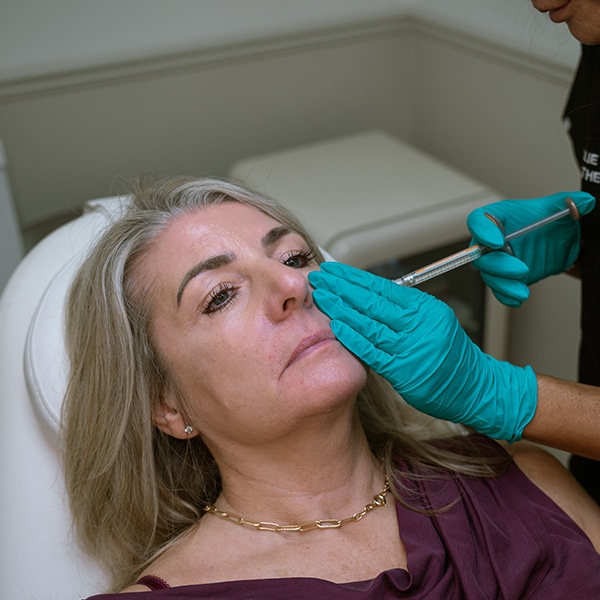
Sculptra is an injectable poly-L-lactic acid collagen stimulator. It has been used in aesthetic medicine for around twenty years, which makes it the longest established product in this category and the one with the largest body of published clinical experience.
It does not work in the way a gel filler does. The PLLA particles are placed in the tissue and prompt a gradual response, and over the following weeks and months new collagen forms around them. The particles themselves are broken down and absorbed. What remains is your own tissue, which is why the improvement tends to read as better support rather than as something added.
Sculptra arrives as a powder and is reconstituted with sterile water before your appointment. Most protocols then ask for the treated area to be massaged on a set schedule over the first few days. Your clinician will give you the schedule that applies to your treatment.
What is Juläine?
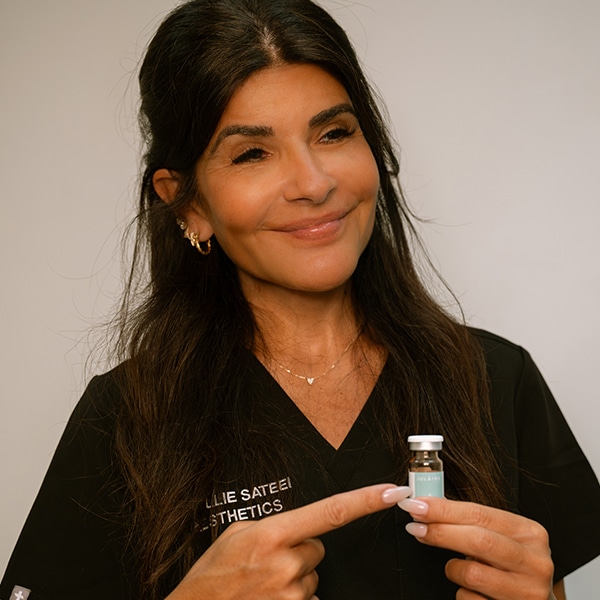
Juläine is also an injectable PLLA collagen stimulator, and the underlying mechanism is the same. The particles prompt a tissue response, new collagen forms over time, and the particles are broken down.
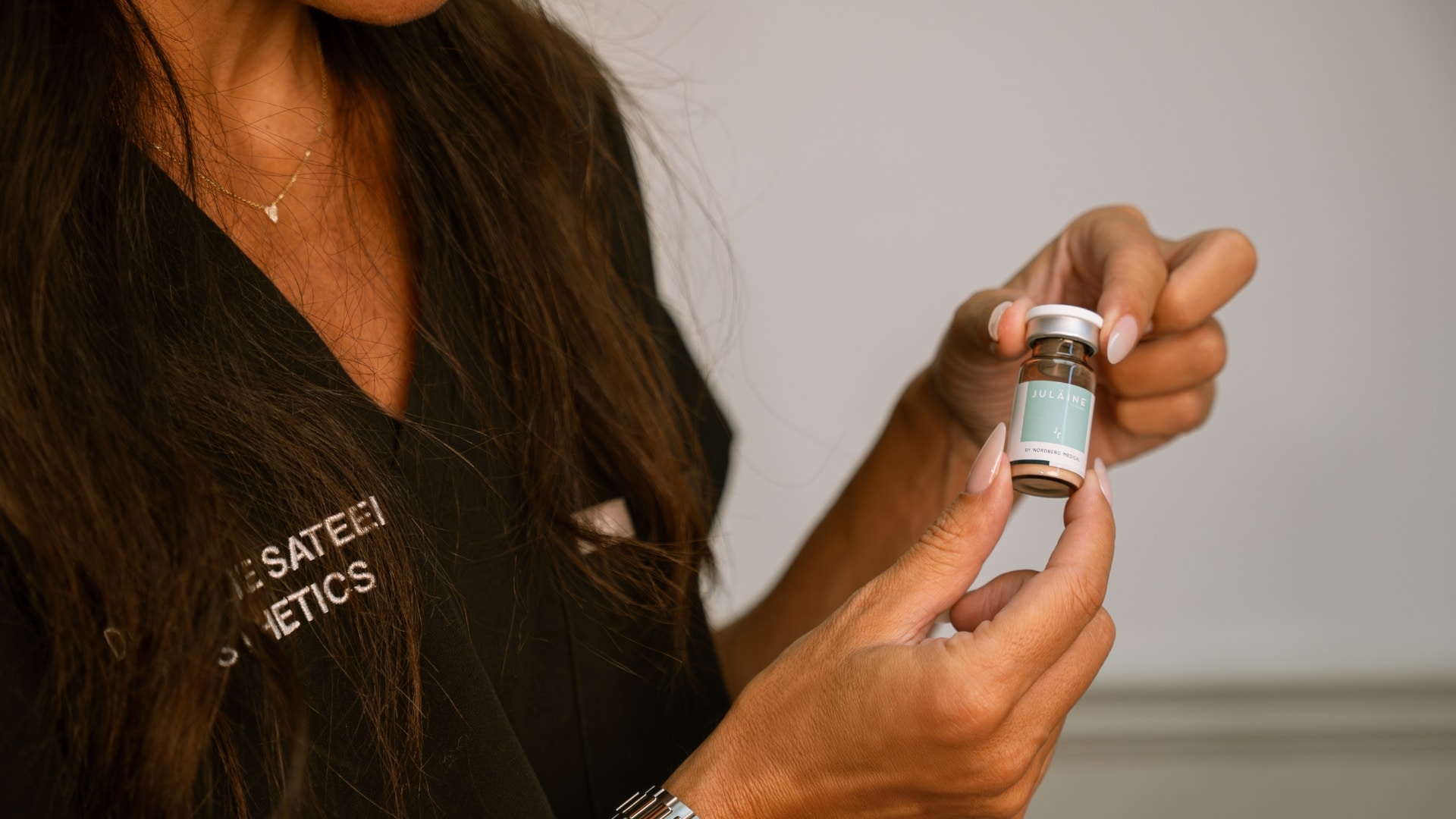
The difference lies in how it is made and supplied. Juläine’s microspheres are produced to a tighter, more uniform size and shape, and the product comes pre-dispersed and ready to inject rather than requiring reconstitution. In practice this tends to mean a more predictable spread through the tissue and, in most protocols, no massage schedule afterwards.
How Sculptra and Juläine differ in practice
Particle manufacture
Both are PLLA, but the microspheres are not identical. Juläine’s are manufactured to a narrower size range and a more uniform shape. Sculptra’s are more variable, which is part of the reason its massage protocol exists: massage helps distribute the product evenly through the tissue after placement.
Preparation
Sculptra is reconstituted before treatment, which means it must be prepared ahead of your appointment. Juläine is ready to use. This does not change the result, but it does affect how appointments are scheduled.
Aftercare
This is the difference most patients notice. Sculptra protocols typically require a structured massage routine over the first few days. Juläine protocols generally do not. Your clinician will confirm the aftercare for the product used, and it should be followed as given rather than as described elsewhere online.
What each tends to be used for
Both support firmness and tissue quality. Sculptra has the longer record for restoring support in the mid and lower face where there has been a meaningful change in structure. Juläine is often selected where firmness and skin quality are the focus and a change in facial volume is not what the patient is seeking. There is considerable overlap between the two, and the decision is made on the face in front of the clinician.
What they share
Neither can be dissolved with hyaluronidase. Both develop gradually rather than immediately. Both usually require more than one appointment with a review between. Neither is used in the lips or the tear trough, where a hyaluronic acid product is more appropriate.
Sculptra and Juläine, compared
| Sculptra | Juläine | |
|---|---|---|
| Active ingredient | Poly-L-lactic acid (PLLA) | Poly-L-lactic acid (PLLA) |
| Time in clinical use | Around two decades | Newer, shorter published record |
| Preparation | Reconstituted before treatment | Supplied ready to use |
| Microspheres | More variable in size and shape | Tighter, more uniform specification |
| Massage afterwards | Usually required on a set schedule | Usually not required |
| How results develop | Gradually, over weeks and months | Gradually, over weeks and months |
| Reversible with hyaluronidase | No | No |
| Used in lips or tear trough | No | No |
| Appointments | Usually more than one, with review | Usually more than one, with review |
Results vary between individuals, and a particular degree or duration of improvement cannot be guaranteed.
Who is collagen stimulation suitable for?
Collagen stimulation may be suitable for patients who have noticed a loss of firmness or support rather than a single defined line or hollow, who are comfortable with a result that develops gradually, and who understand that the treatment cannot be reversed once placed.
It may not be suitable where the concern is a specific line, a lip shape or a defined hollow, as a hyaluronic acid dermal filler is designed for that and will usually do it better. It may not be suitable if you need to see a change within a fortnight, or if the prospect of a product that cannot be dissolved is one you are not comfortable with. That last position is entirely legitimate and will be respected rather than argued with.
Treatment is not recommended during pregnancy or breastfeeding. Tell your clinician about any medical conditions, medication, allergies, history of abnormal scarring and previous injectable treatments, including those carried out elsewhere. If you are weighing this up, the collagen stimulation page sets out the category in more detail.

What results can you expect?
Many patients notice very little in the first few weeks. This is expected. The collagen response develops over time, and the improvement typically becomes apparent across the second half of the first few months rather than immediately after treatment.
A course of treatment is usually recommended, with the number of vials and appointments agreed with you at consultation. Progress is reviewed at an appointment you arrange together rather than judged in the mirror the morning after, because early swelling can obscure what is actually happening.
How long the improvement lasts varies depending on your tissue, your age, your general health and lifestyle factors. Your practitioner will advise what is realistic for you. Maintenance is discussed at review rather than booked in advance.
Most patients return to their usual routine the same day. Redness, swelling, bruising and tenderness at the injection points can occur and usually settle within a few days.
If you are treated with Sculptra, you will be given a massage schedule and asked to follow it precisely. If you are treated with Juläine, massage is generally not required, but you should still follow the aftercare instructions given to you rather than a protocol you have read about elsewhere.
Avoid strenuous exercise, saunas, steam rooms and alcohol for the period your clinician specifies, usually at least the first 24 to 48 hours. Protect the treated area from strong sun. Contact the clinic about persistent or worsening symptoms, unusual pain, or any change in the skin’s appearance rather than waiting for the next appointment.
As with any injectable treatment, there are risks. Bruising, swelling and tenderness are common and usually short lived. Small firm areas or nodules can form, which is why placement technique, product dilution and aftercare all matter. Infection is uncommon but possible with any injection.
The most important limitation to understand is that neither product can be dissolved. Hyaluronic acid filler can be reversed with an enzyme if the result is not what was wanted. Collagen stimulators cannot. This needs to be understood and accepted before treatment rather than discovered afterwards, and it is raised at consultation whether or not you ask.
Neither treatment is a lift, and neither is a substitute for surgery where there has been significant laxity. Where that is the case, saying so is more useful than proceeding.
Why choose Dr Ellie Sateei?
Dr Ellie Sateei has more than twenty years of experience in aesthetic medicine, with a background in oral and maxillofacial trauma and training at the Karolinska Institute. She is registered with the General Dental Council and is a member of the ACE Group, which sets standards for the management of complications in aesthetic practice.
Treatment is doctor-led from assessment onwards. Every plan begins with a diagnosis of what has actually changed in the tissue, and the product is chosen after that rather than before.
The clinic is at The Medi Suites, 120 Pall Mall, St James’s, in central London, a short walk from Piccadilly Circus and Charing Cross.
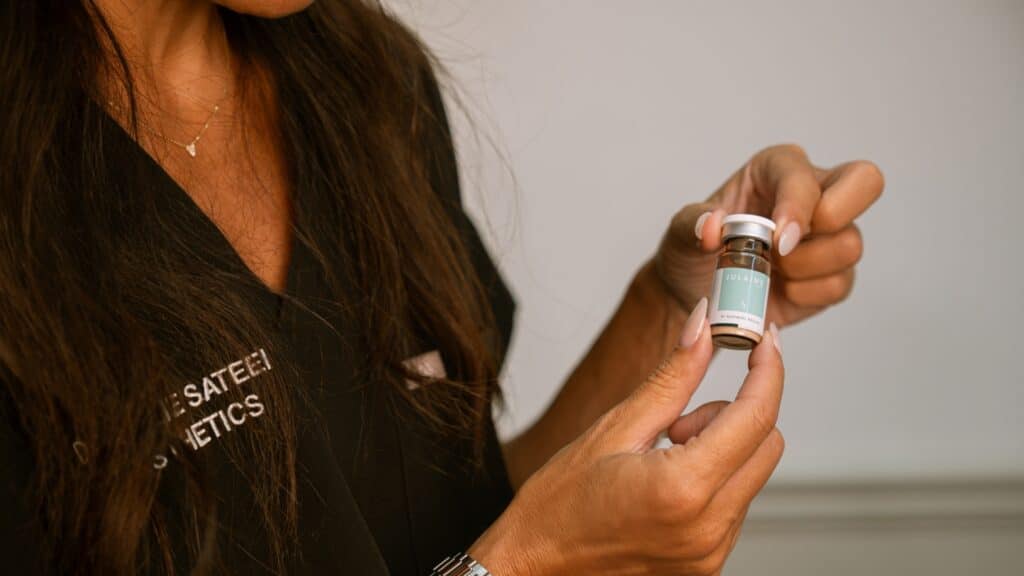
Sculptra and Juläine in the clinic

Frequently asked questions
Juläine is £1,295 for one vial and £1,945 for two. Sculptra pricing and the full treatment list are on the prices page. The new patient consultation is £195, deducted from the cost of treatment carried out on the same day.
Neither is better in a general sense, as both are poly-L-lactic acid working through the same mechanism. The appropriate choice depends on your tissue, the area being treated and the aftercare you can realistically commit to. Sculptra has a longer published record. Juläine has a more uniform particle specification and usually requires no massage. Your practitioner will advise which is more suitable after assessing your skin.
No. Unlike hyaluronic acid fillers, which can be reversed with hyaluronidase, collagen stimulators cannot be dissolved once placed. The particles are broken down by the body over time, but there is no way to reverse the treatment on request. This is an important consideration and is discussed in full at consultation before any treatment is agreed.
Results develop gradually rather than immediately. Many patients notice little change in the first few weeks, with improvement becoming more apparent over the following months as new collagen forms. This is normal and expected with both products. Progress is assessed at a review appointment rather than in the days immediately after treatment.
If you are treated with Sculptra, most protocols require a structured massage routine over the first few days, and your clinician will give you the exact schedule. Juläine protocols generally do not require massage. Follow the specific aftercare instructions you are given rather than advice found online, as protocols differ between products and practitioners.
This varies considerably depending on the area treated and what the assessment finds. Most patients need more than one appointment, with a review between sessions to see how the tissue has responded. The number of vials and the total cost are agreed with you at consultation, before any treatment begins, so there are no unexpected additions later.
In many cases yes, but it depends on how long ago the previous treatment was, how your tissue responded and what is being treated now. Tell your practitioner about all previous injectable treatments, including any carried out at other clinics, as this affects both planning and safety.
No. Neither product is appropriate for the lips or the tear trough. These areas have thin, mobile tissue where a hyaluronic acid product is used instead, partly because it can be dissolved if needed. If your concern is in either of those areas, a different treatment will be recommended.
Because the improvement is your own collagen rather than a gel that is gradually absorbed, many patients find the result persists well beyond the treatment itself. How long varies between individuals depending on age, tissue quality, general health and lifestyle. A particular duration cannot be guaranteed, and maintenance is discussed at review.
Book a consultation
If you are weighing up collagen stimulation, the useful next step is an assessment rather than a decision. A consultation with Dr Ellie Sateei will establish what has actually changed in your skin, explain which options are appropriate and why, and set out realistic expectations before anything is agreed.