


Dr Ellie’s Blog
SkinPen vs at-home microneedling
Written by the team at Dr Ellie Sateei, 2nd November, 2026
A roller bought online and a medical device used in clinic work at different depths in the skin, which means they do different things.
A derma roller costs about thirty pounds. A course of medical microneedling costs considerably more, and it is entirely reasonable to look at those two numbers and ask what you are paying for. The short version is that they are not the same treatment at different prices. Home devices carry needles of roughly 0.2mm to 0.5mm, which work on the outermost layer of the skin, while SkinPen, the device used for microneedling in clinic, has adjustable depth set at consultation and reaches the level at which collagen is remodelled. This article explains how they differ, what a home device can reasonably achieve, where the real risks sit, and when a course in clinic is the more appropriate route.
Why the two are so often confused
Home microneedling is marketed in language borrowed almost entirely from clinical treatment. The same words appear, the same claims about collagen are made, and the implication is that the device on your bathroom shelf is doing a smaller version of the same job.
It is not an unreasonable assumption. The devices look similar and the mechanism sounds identical. But the depth limit on a consumer device is not an accident of cost. It is the threshold below which a device can be sold for unsupervised use without being regulated as a medical one, and it sits deliberately above the level at which collagen remodelling occurs.
Understanding which of the two things you are buying is the whole of the decision.

What is at-home microneedling?
Home devices come as rollers, stamps and battery-powered pens, and are sold as cosmetic devices. Most have needles between 0.2mm and 0.5mm.
At that depth the needles disturb the outermost layer of the skin. The effect is on the surface and it is real but modest. Skin can look temporarily brighter, and products applied afterwards tend to penetrate somewhat better.
Devices sold online with longer needles are a different proposition altogether. Those reach into skin that has a blood supply, with no sterile field, no assessment and no reliable way of knowing what depth is appropriate for your skin.
What is SkinPen?
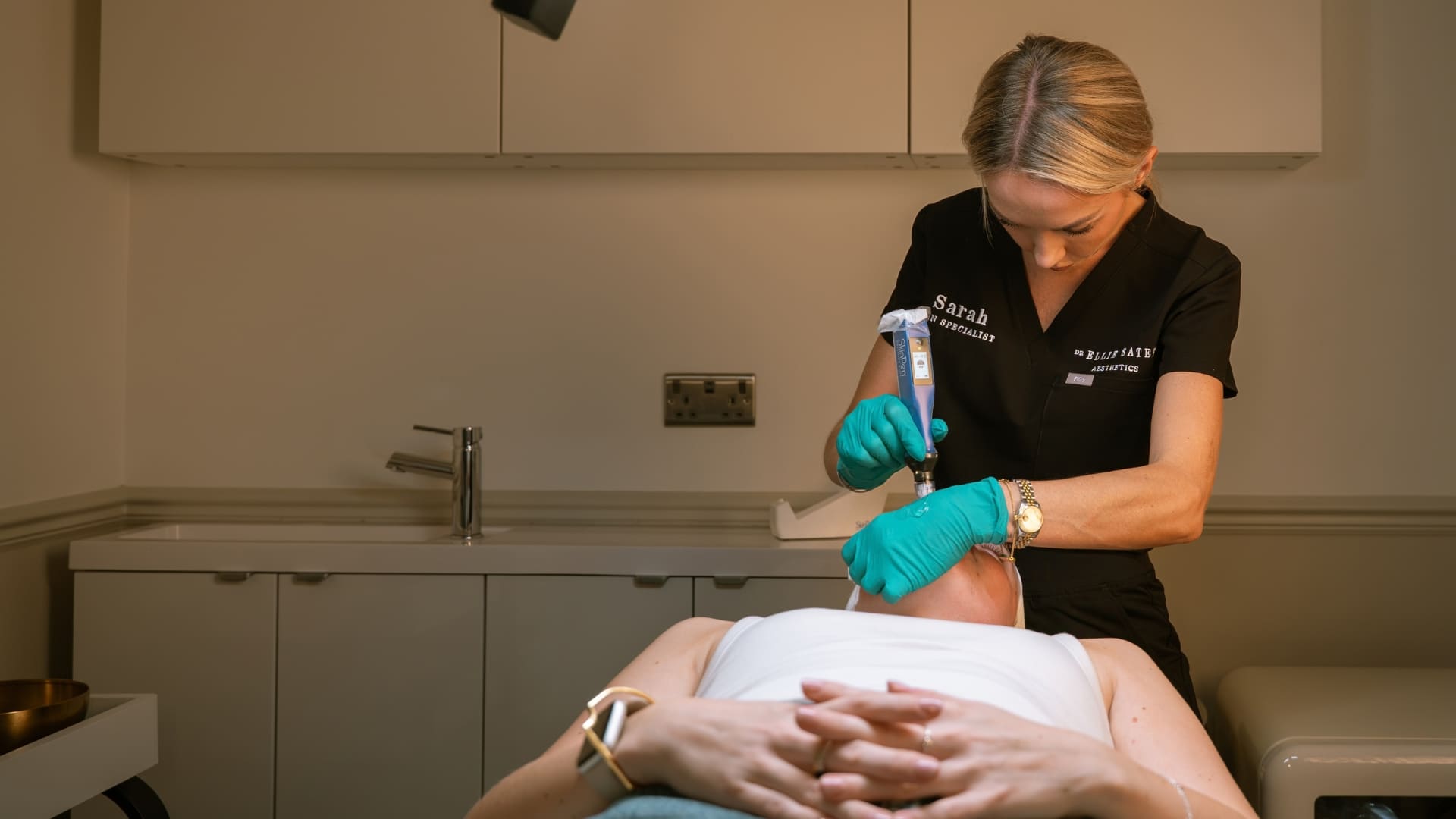
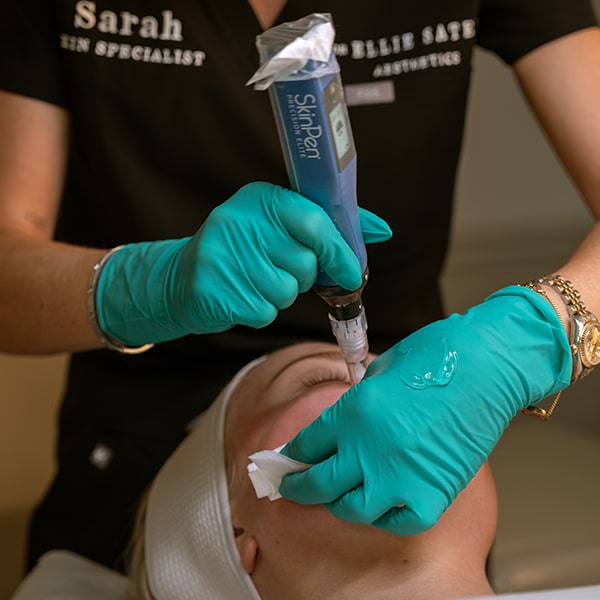
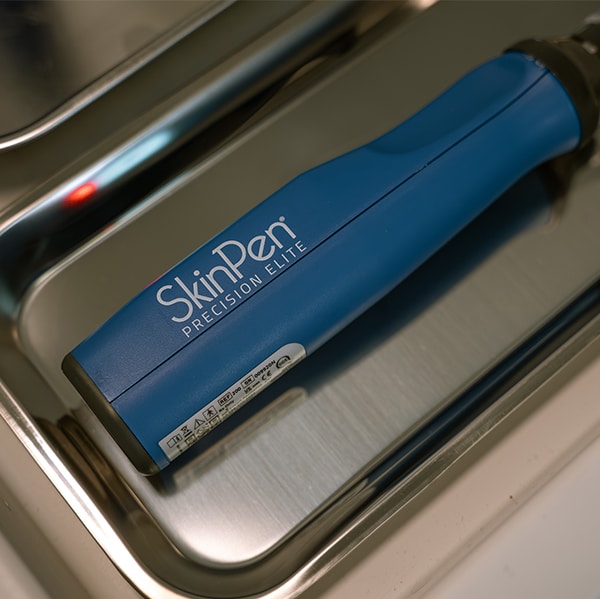
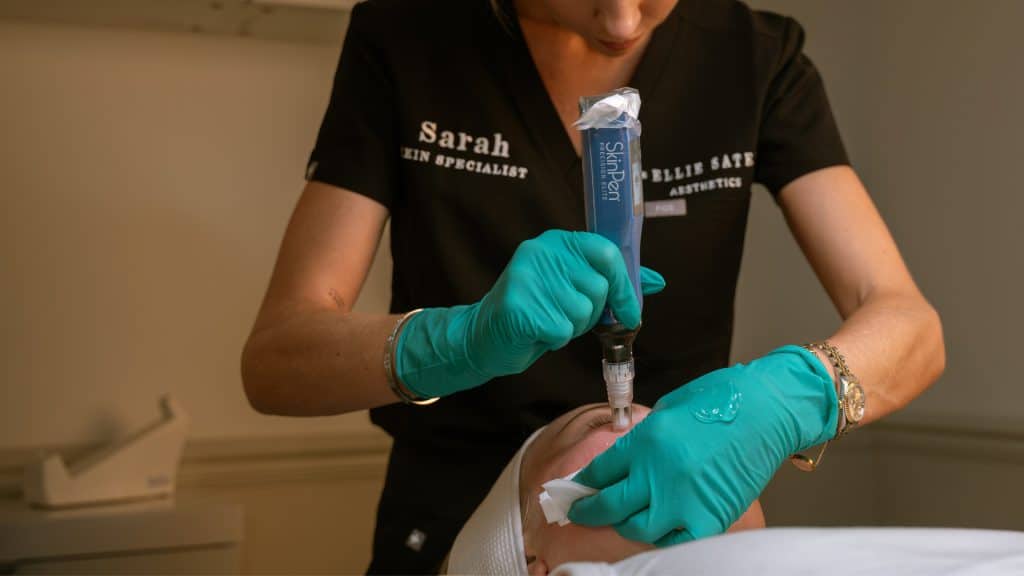
SkinPen Precision is a medical-grade microneedling device that uses a sterile, single-use needle cartridge to create controlled micro-injuries in the skin. Treatment depth is selected according to your skin, the area and the concern being treated.
At those depths the skin registers the channels as small injuries to repair, and that repair response prompts fibroblasts to produce fresh collagen and elastin. It is why microneedling improves texture and firmness rather than simply resurfacing the top layer, and why it is used for acne scarring.
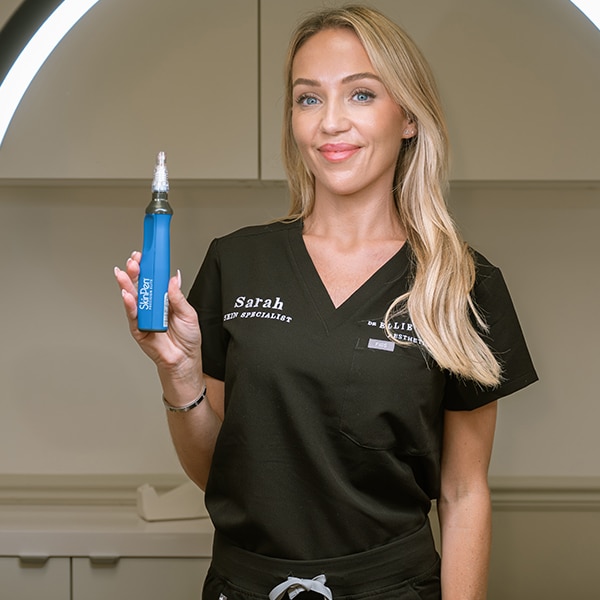
At Dr Ellie Sateei’s London clinic it is carried out by trained skin specialists, with a fresh cartridge for each patient, and planned as a course rather than a single appointment. Results build over months rather than appearing after one session, and results vary between individuals.
The differences that matter
Depth, and therefore effect
This is the substance of it. Below a certain depth you are working on the surface. Above it you are engaging the repair process. A home device is built to stay on the correct side of that line, which means it is not underpowered. It is doing the job it was designed for, which is a cosmetic one.
Sterility
SkinPen uses a single-use sterile cartridge, discarded after one patient. A home device is used, rinsed, kept in a bathroom and used again, on skin that has not been clinically prepared. Rollers in particular are difficult to clean properly because of how they are constructed.
The motion
A pen stamps vertically, so the needle enters and leaves along the same path. A roller enters at an angle, drags across as it turns, and leaves at an angle, which makes the channel wider and more disruptive than it needs to be. Two devices with identical needle length do not do identical things to skin.
What is applied afterwards
The most common source of trouble is not the needling itself. It is what people apply straight after it. A serum formulated to sit on the skin is not formulated to go into it, and vitamin C preparations, essential oils and most active skincare fall into that group. In clinic the instruction is explicit: use only the specified post-treatment products, and do not add serums, exfoliants or other active skincare while the skin is recovering. Where something is added, it is chosen for that purpose, such as exosomes or polynucleotides delivered into channels in skin that is already primed to repair.
Screening
A consultation establishes whether microneedling is appropriate for you before anything begins. A device bought online screens no one.
SkinPen and home devices compared
| At-home devices | SkinPen in clinic | |
|---|---|---|
| Typical needle depth | Around 0.2mm to 0.5mm | Adjustable, selected at assessment |
| Reaches the level where collagen remodels | No | Yes |
| Needles | Reused | Single-use sterile cartridge |
| Motion | Rolling, angled entry | Vertical stamping |
| Depth decided by | You | Clinical assessment |
| Applied afterwards | Whatever is on your shelf | Products chosen for that purpose |
| Screening for suitability | None | Consultation first |
| Realistic effect | Brighter surface, better absorption | Textural change over a course |
Results vary between individuals, and a particular degree or duration of improvement cannot be guaranteed.
What a home device can honestly do
This is not an argument for throwing yours away.
Used at 0.25mm, kept clean, replaced regularly and followed with something sensible, a home device gives a modest improvement in how well your skincare absorbs and can leave skin looking temporarily fresher. That is a legitimate thing to want and a reasonable thing to buy.
What it will not do is soften acne scarring, change skin texture or build collagen, and no frequency of use will turn it into something that does. Using it more often does not compensate for the depth. It simply irritates skin that has had no time to settle.
If what you want is the first thing, a home roller is a sensible purchase. If you want the second, it is not a cheaper route to it.
Who is microneedling suitable for?
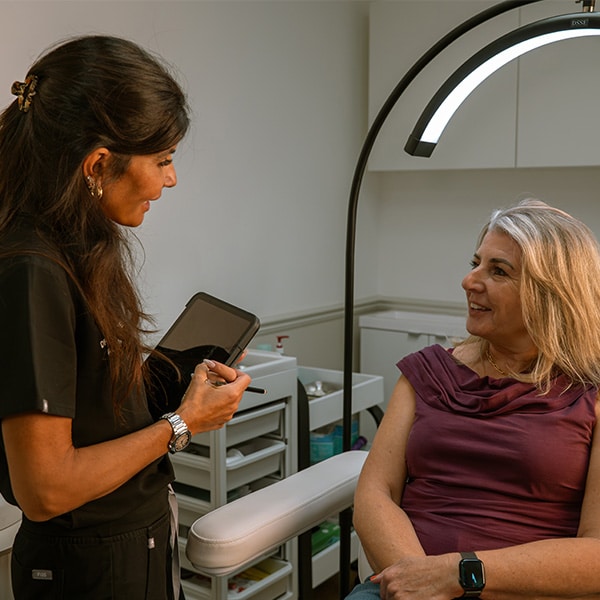
Microneedling in clinic may suit you if you want to improve overall texture, tone and smoothness, soften the appearance of shallow acne scarring and enlarged-looking pores, support firmer skin as part of a longer-term plan, or improve skin quality on the neck and décolletage as well as the face. It also suits people who want minimal downtime.
It is usually not the right first step where there is an active skin infection, an ongoing inflammatory flare in the area, or active moderate to severe acne, which needs managing first. It is not recommended during pregnancy. A history of keloid scarring, oral retinoid use, or certain autoimmune or clotting conditions are discussed at consultation and may lead to an alternative being recommended.
A range of skin tones can be treated following individual assessment, though irritation and pigment changes remain possible and depth is selected accordingly. Tell your practitioner about skin conditions, allergies, medication, previous procedures and any history of abnormal scarring or poor healing.
What results can you expect?
Results are progressive. Many patients notice a fresher look within the first couple of weeks, but the meaningful improvement in texture and firmness develops as new collagen forms over roughly one to three months.
Because of that, microneedling is planned as a short course spaced a few weeks apart, typically three to six sessions depending on the concern, with occasional maintenance afterwards. Acne scarring generally needs more sessions than textural improvement. Results vary between individuals, and the course is agreed after assessment rather than set in advance.

Numbing cream is applied first, so treatment is comfortable for most people and is usually felt as a light prickling or vibration. A session takes around 45 minutes to an hour including preparation, depending on the area.
Afterwards you can expect redness and a warm, tight feeling for a day or two, much like mild sunburn, and for some people the colour takes three to four days to settle fully. Most patients return to normal activities the next day and can wear mineral makeup after around 24 hours.
Sun protection afterwards is essential rather than optional. Follow the written aftercare you are given, use only the specified post-treatment products, and do not add serums, exfoliants or other active skincare while the skin is recovering. Your practitioner will explain when to resume cleansing, sunscreen, makeup and exercise. Contact the clinic promptly about worsening redness, warmth, swelling, pain, discharge or a spreading rash.
Redness, mild swelling and temporary sensitivity are expected. Less commonly, treatment can cause prolonged redness, infection, or changes in pigmentation, and this last risk is higher in deeper skin tones and where sun protection is neglected afterwards. Cold sores can be reactivated in patients prone to them, which is one reason history matters at consultation.
The limitations are worth stating as plainly. Microneedling improves texture and the appearance of scarring. It does not lift, does not add volume and will not address lines caused by muscle movement. Where the concern is laxity or structure, a different treatment is more appropriate, and saying so is more useful than proceeding.
Why choose Dr Ellie Sateei?
SkinPen microneedling at Dr Ellie Sateei’s clinic is provided by trained skin specialists at the London clinic. Your practitioner assesses your skin, agrees the treatment plan and explains recovery and follow-up before treatment begins.
Every course is tailored to your specific concerns following a thorough skin consultation. Depth, interval and anything applied afterwards are decided once your skin has been assessed, which is the part of microneedling most often got wrong elsewhere.
The clinic is at The Medi Suites, 120 Pall Mall, St James’s, in central London, a short walk from Piccadilly Circus and Charing Cross.
Microneedling at the clinic
Frequently asked questions
SkinPen microneedling is £350 per session at the London clinic. There is also a twelve-month Microneedling Membership, which spreads the cost of a personalised programme of six treatments across the year: £350 initially, then £175 a month for ten months, £2,100 in total. It includes a complimentary Signature Skin Renewal Facial on your birthday, a ZO Skin Health four-step skincare programme to support your skin between treatments, and ten per cent off an order from The Edit. Current figures are on the prices page.
Used as intended, at around 0.25mm, with a clean device replaced regularly, home microneedling is generally low risk. The risks rise with longer needles, with devices that are not kept clean, and with products applied immediately afterwards that were never designed to enter the skin. If you have active acne, eczema, rosacea in flare or a history of keloid scarring, seek advice before using one.
Home devices are typically sold at 0.2mm to 0.5mm, and around 0.25mm is the depth most commonly recommended for unsupervised use. Longer needles reach tissue with a blood supply and are not appropriate without training, a sterile field and an assessment of your skin. Depth in clinic is selected by your practitioner for each area treated.
Not meaningfully. Softening textural scarring requires remodelling at a depth home devices do not reach, which is why acne scarring is treated with a course of medical microneedling instead. A roller may improve how products absorb, but it will not change the scarring itself regardless of how often it is used.
SkinPen Precision uses a sterile, single-use cartridge and has adjustable depth selected at assessment, and it stamps vertically so the needle enters and leaves along the same path. A roller has a fixed shallow depth, is reused, and enters and leaves the skin at an angle, which creates a wider and more disruptive channel.
Anything formulated to sit on the skin rather than enter it, which includes vitamin C preparations, essential oils, exfoliants and most active skincare. Freshly needled skin absorbs far more than usual, and irritation is common. Keep to a plain, barrier-supporting moisturiser and sunscreen until the skin has settled.
Less often than most people do. Skin needs time to recover between uses, and using a device more frequently will not compensate for its shallow depth. It will simply keep the skin irritated. Follow the manufacturer’s guidance, replace the device regularly, and stop if your skin becomes persistently red or sensitive.
It is not advisable. Devices sold with longer needles reach tissue with a blood supply, and using one without training, a sterile field or an assessment of your skin carries a genuine risk of infection, scarring and pigmentation change. Depth is a clinical decision, and it is the single thing most likely to cause harm when it is guessed.
Ask your practitioner, as it depends on your skin and where you are in the course. Skin recovering from a clinic session should generally be left alone, and adding a home device on top can prolong irritation rather than improve the result. Your practitioner will tell you when, and whether, to resume.
Book a consultation
If you have been using a home device and are not seeing what you hoped for, the useful next step is an assessment rather than a stronger device. A consultation will establish what is actually happening in your skin, whether microneedling is appropriate, and what a realistic course would involve.